

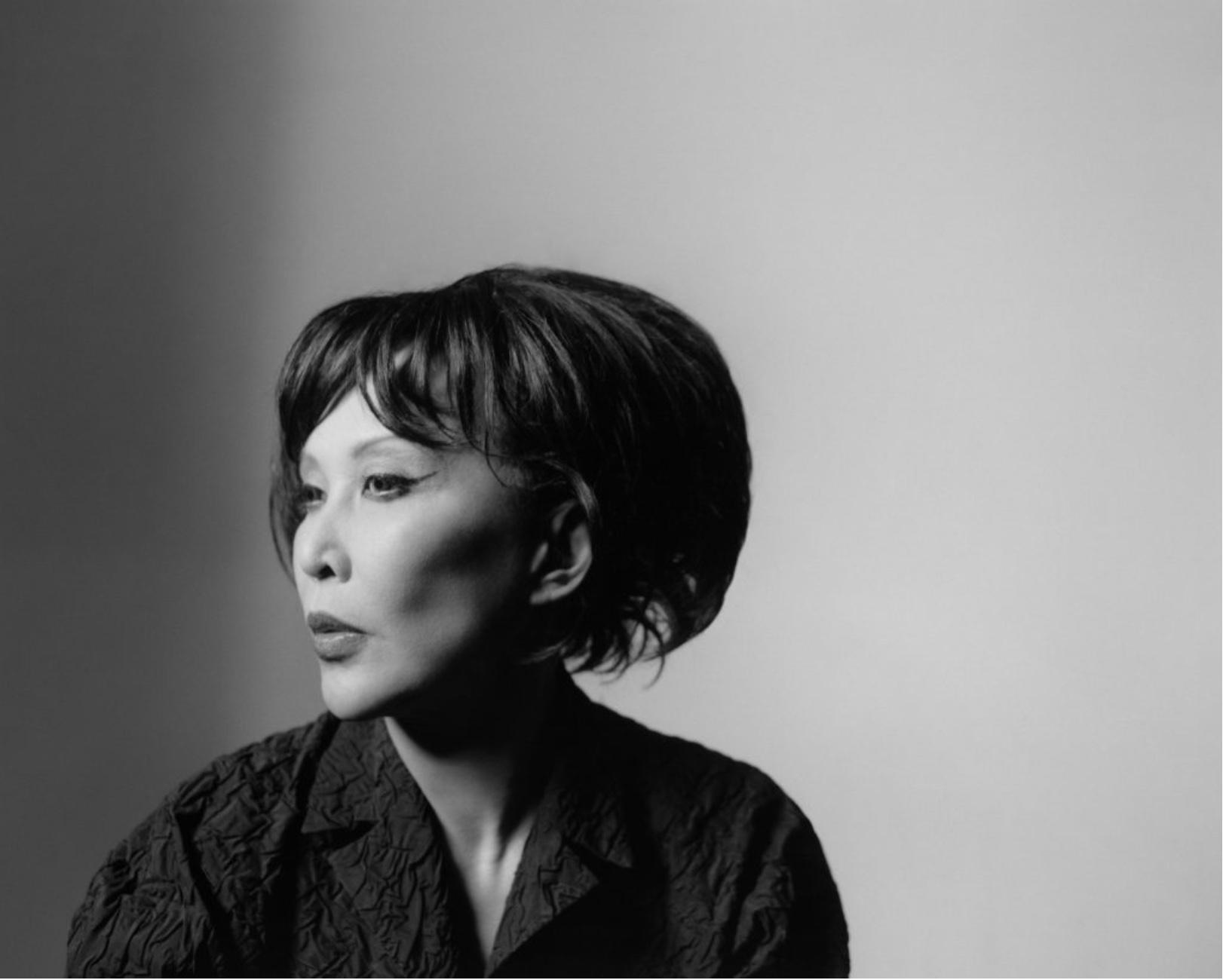
When Jenny Holzer’s Truisms and Survival texts appeared in Chinese for the first time, they did so on the sixth floor of Hong Kong’s Pedder Building in 2013, inside Pearl Lam Galleries. The centrepiece was Light Stream, an LED swarm Lam’s team helped realise as Holzer’s first Hong Kong solo. English and Chinese statements flashed and wrapped around each other until the room felt bilingual on its own. Visitors who came for a blue-chip name left arguing about sentences they had never seen in Chinese on a gallery wall. Lam has been staging that kind of meeting since the early Contrasts pop-ups of 1993: put the work where the city has not yet been asked to look, then stay with it long enough that people talk afterward.
She was born in Hong Kong, educated in the United States and the United Kingdom, and came home with an accounting degree and an eye already caught by designers such as Tom Dixon and Ron Arad. Her father, the late Lim Por-yen, wanted her in property. She negotiated gallery time instead, first as Contrasts in Hong Kong, then as a permanent Shanghai space in 2005 that hung design with the same seriousness as painting. The aubergine bob and the dinner table get her into rooms. What she does once she is there is decide who else gets a seat. An ICON profile once caught her admitting she found Zhang Huan’s ash paintings gross at first, invited him to dinner anyway, and became, in her word, addicted: the work moved from the table to the gallery wall.
Design was never a side gallery for her. In 2004 she curated Awakening: La France Mandarine for the French Year in China, asking Chinese and European designers to work with porcelain, lacquer, jade, and silk for public audiences in Shanghai and beyond. The next year Contrasts sat among the fifteen galleries at the inaugural Design.05 Miami fair in the Moore Building, presenting Shao Fan’s Ming-inflected furniture as objects that belonged on a fair floor beside sculpture. Shao’s Ming Style Penta Star, built with mortise-and-tenon joinery into a sculptural star, later carried that argument into Design Miami’s Basel editions, where Lam’s booths kept Chinese craft methods beside Western designers through a Shanghai residency. The 2023 Shanghai show Decorative Art = Design? Design = Art? brought the same argument back with André Dubreuil, A.A. Murakami, Danful Yang, and her own XYZ Design studio. A chair and a canvas share the wall until the work settles which one you came for.
“You cannot have great collectors without great museums.”
Pearl Lam, speaking to the Financial Times
On the painting side she was just as deliberate about who walked in first. When Pearl Lam Galleries opened at Pedder in May 2012, on the eve of ArtHK, the debut was Chinese Contemporary Abstract, 1980s Until Present: MINDMAP, curated by Gao Minglu with Zhu Jinshi, Su Xiaobai, and peers whose abstraction Western markets had barely mapped. Maggi Hambling’s The Night in 2024 at Printing House on Duddell Street brought a British painter who still starts her days studying Chinese ink at the British Museum, her first Asia solo since museum shows in Beijing and Guangzhou in 2019. Between those dates she kept putting Chinese gestural paint next to Western names and letting Hong Kong argue with the hang. Yinka Shonibare’s Dreaming Rich, opening late in 2013, even put Cristal bottles and Dutch-wax mannequins into a critique of local wealth that felt written for Central after dinner. The remembered room mattered more than the longer roster.
The newest spaces are smaller on purpose. At 70 Square Metres on Hengshan Road in the former French Concession, she opened a residency gallery in 2024 and gave American painter Moses Hamborg months in Shanghai before his first solo, Taxon, painted from local models on jute and viewed by appointment. Meanwhile Su Xiaobai, a gallery artist for more than a decade, anchors Alchemical Universe at Palazzo Soranzo Van Axel as an official collateral event of the 2026 Venice Biennale, presented by the Su Xiaobai Foundation and LACMA, with rooms designed by Kulapat Yantrasast. That is the long game she described to the FT: collectors need museums, and artists need rooms that travel.
You can still walk into the programme. Pearl Lam’s West Bund booth at 1B10 during fair week sits in West Bund Art & Design 2026. The wider map lives in The Collectors Shaping Contemporary Asian Art and Why Design Miami Basel Matters to Asian Collectors. If the fair booth is too noisy, keep Pedder and Hengshan Road for a quieter proof of the same introduction.