

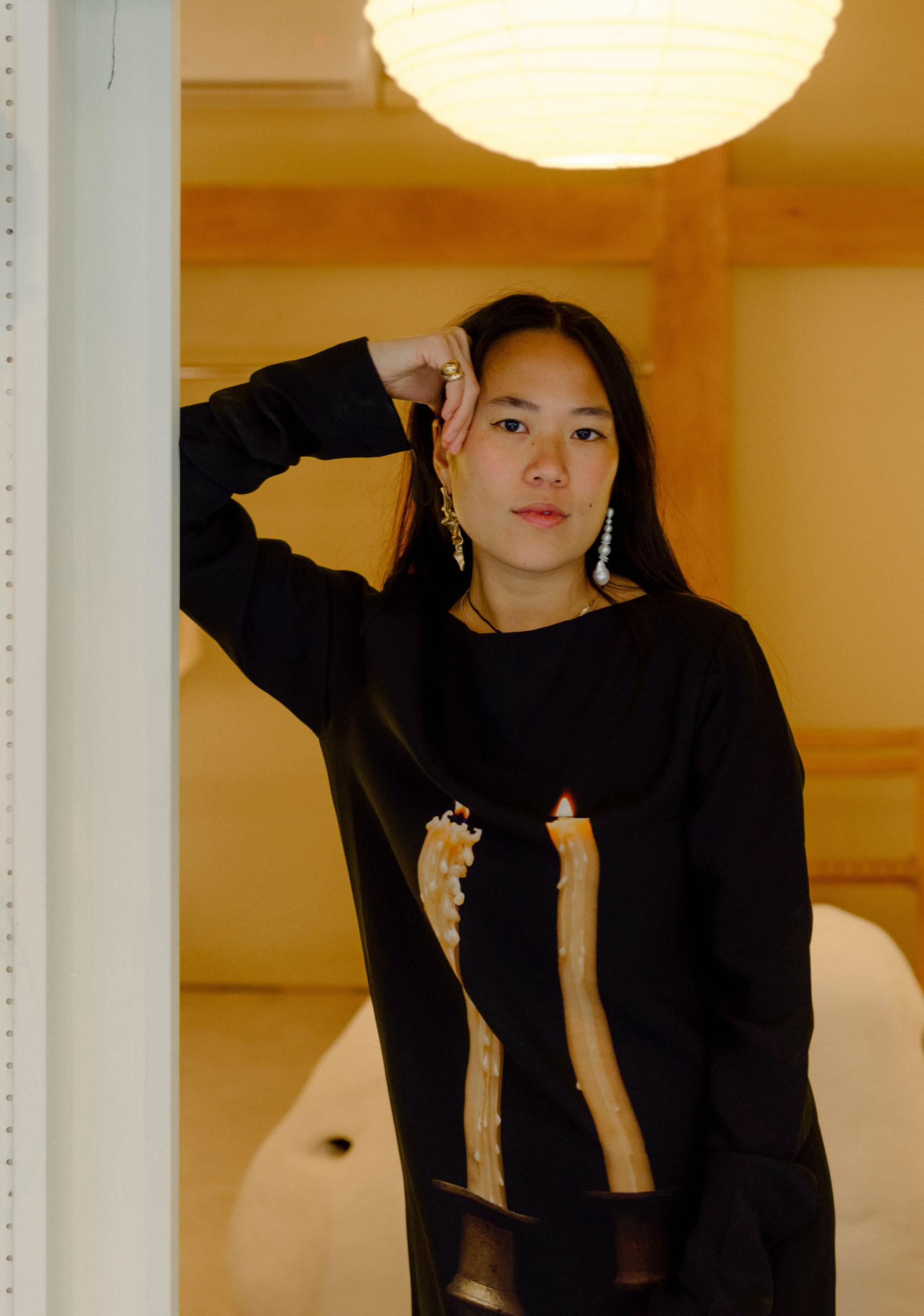
As a child visiting Biên Hòa, Beverly Nguyen watched her grandmother Chat run a hardware store that sold the things a house actually needs, then cook dinner in a living area at the back so the family came to her. The shop was where the day ended. Decades later, on Orchard Street in New York, she is still building rooms like that: useful objects out front, a reason to stay in the back.
She spent a decade in fashion, including years as studio director for stylist Kate Young, before opening what became BEVERLY 1975. Raised in Orange County by Vietnamese parents who built a textile business, she wanted the store to hold the tools of hosting and the memory of how her family used them. The first rule is almost blunt. Buy the object you will reach for when someone walks through the door.
"I feel like there's so much anxiety around building a home and hosting and entertaining, and what that's supposed to look like and what kind of budget that requires. The point is that you can go in and spend $5 or $100, and come out with either these mundane, simple things, or these very beautiful objects that don't stress you out when it comes to filling your home."
Beverly Nguyen, speaking to Vogue at the first Beverly's pop-up in 2021
When Beverly's opened on Ludlow Street in April 2021, she stocked Chinatown restaurant-supply ladles, cast iron, chopsticks, and steamers beside ceramics, glassware, and linens her parents still make in California. A Winco kettle she has praised in print still reminds her of her grandmother's tea corner in Southern California. She once likened the mix to a country-market Muji, which is a fair description if you have ever needed a five-dollar brush and a serious steamer in the same afternoon. Hosting, in her version, starts with hot water, a ladle, and a stack of bowls someone can pick up without asking.
That habit comes from home. Around the Orange County table she learned canh chua, clay-pot rice, pickles, and the rhythm of shared dishes. In her loft, a big oak table designed with Louis Rambert for an early pop-up became the room's gravity: dinners for eight, dinners for one, a baby shower, long talks that outlasted the food. She has written that a solid table supports a lifetime the way a family does, and that surface has had to prove it.
Entertaining follows the same surface. With Cabana editor Kate Berry, a frequent co-host they both describe as a sister more than a friend, she keeps the kitchen open, batches dirty martinis, and asks guests to swap seats before the night settles into one conversation. Family-style plates matter because Vietnamese eating is preparation as much as eating. "When you have people over, you become a five-star hotel," she has said, and she means the guest's comfort becomes the brief. She reaches for candlelight and deeper plates before holiday sparkle, and puts a mountain of food in the middle of the table instead of plating a show.
The shop is how those habits reach people she does not already cook for. After Rockefeller Center and a Nordstrom Home corner, she signed a permanent lease at 27 Orchard Street and opened in October 2023 with Rambert and builder Yudai Kanayama. The room still feels closer to an apartment than a concept store: a kitchen wall of Chinatown tools, Christofle next to simpler glass, enough chairs that people linger. Coverage of the 2021 Rockefeller pop-up widely called her the first Asian American woman to open a store there. On Orchard the claim that sticks is smaller: Cantonese, Taiwanese, and English speakers still meet over brushes and bowls.
She also edits livings for Family Style, the New York arts-and-food journal, so the same instincts show up in print. The shop itself sits at 27 Orchard Street, on the Chinatown and Lower East Side edge: Wednesday through Sunday from noon to seven, Monday and Tuesday by appointment, with details on beverlys.world. If next Saturday needs a ladle, that is the errand. The longer point is the one she learned in Biên Hòa: leave a room open long enough that people know where to gather.